
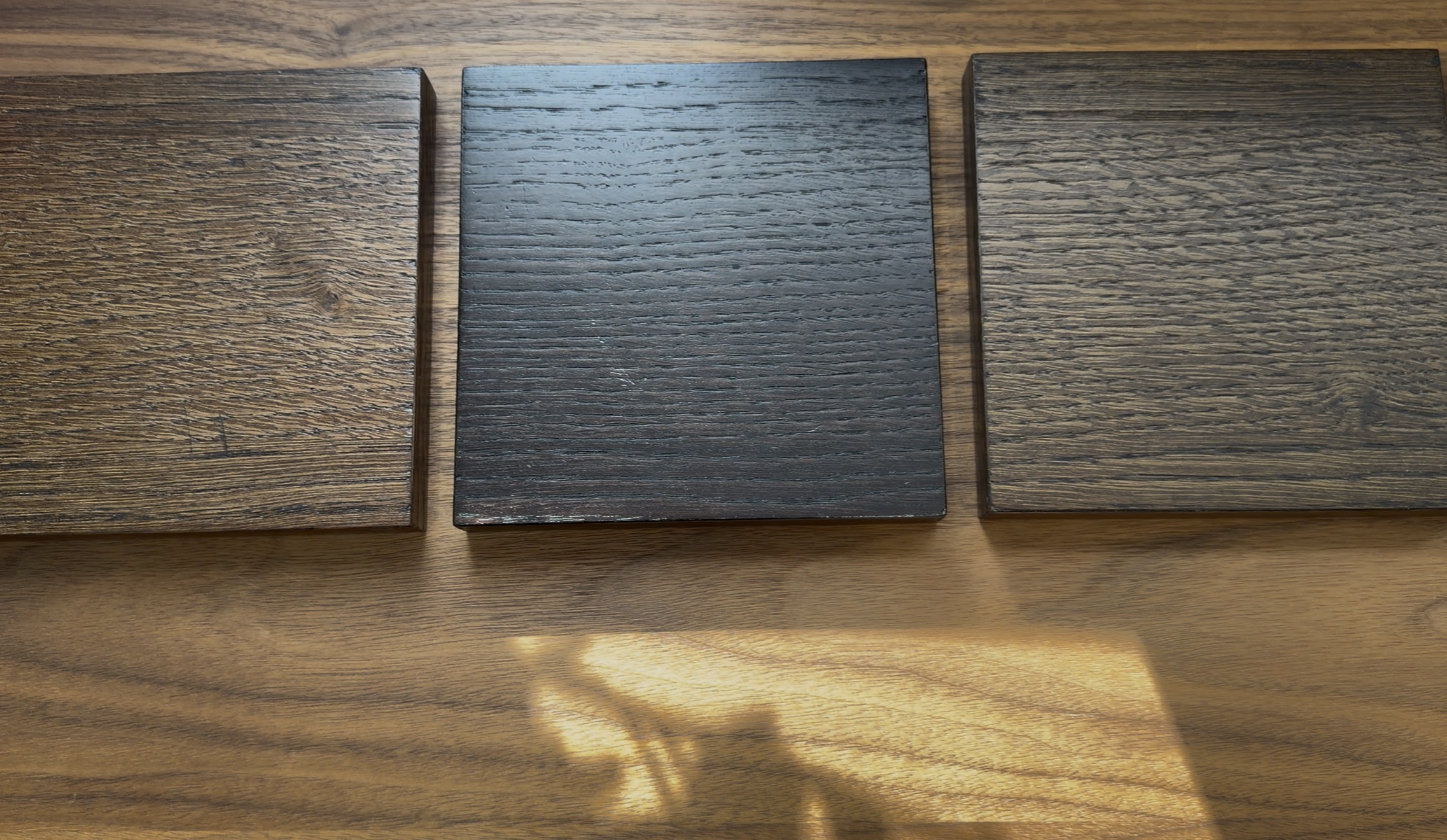
Why the Same Stain Looks Different on Veneer Panels?
1. Staining is often expected to produce a consistent, uniform result.
In reality, even when the same stain is applied, veneer panels can appear noticeably different. This is not a flaw in the process, but a reflection of how the material itself behaves.
2. Staining Doesn’t Change the Wood — It Reveals It
Veneer is a natural material, and no two sheets are identical.
Even within the same batch, variations in grain pattern and density influence how the surface responds during finishing. What may appear as inconsistency is often simply the natural character of the wood being revealed rather than altered.
3. Grain Structure Influences Absorption
The way veneer takes stain is largely determined by its internal structure.
Areas with a more open grain absorb more pigment, resulting in a deeper and darker tone. Denser sections absorb less, reflecting more light and appearing lighter.
This variation can occur across a single sheet, between panels, and even within the same surface.
4. The Effect of Light on the Final Appearance
The final appearance is shaped not only by absorption, but also by how the surface interacts with light.
Denser areas reflect more light, making them appear brighter, while more porous areas absorb both stain and light, creating contrast in tone.
As a result, two panels finished in exactly the same way may still appear different depending on lighting conditions, viewing angle, and surrounding materials.
5. Setting Expectations Through Sampling
Because of these natural variations, sampling becomes essential.
Using the exact veneer, stain, and finishing process allows expectations to be defined before production begins. It ensures that both the maker and the client understand how the final result will behave in context.
Joinery works with materials that vary, not systems that repeat. Consistency comes from understanding that variation, not trying to eliminate it.